Achievements (Satellite Project)
Survey on the Use of Satellite Positioning Systems in the Aviation Sector (FY2020 - FY2025)
Client: Cabinet Office, Government of Japan
The Quasi-Zenith Satellite System (QZSS*) has been transmitting L5S signals since 2017 for the demonstration experiment of DFMC SBAS (Dual Frequency Multi-Constellation SBAS) as a positioning technology demonstration service ahead of the rest of the world. This demonstration experiment has contributed significantly to the formulation of international standards (Standards and Recommended Practices: SARPs) to be set by the ICAO. Furthermore, the QZSS provides satellite positioning services that are highly compatible with GPS.
By positioning the QZSS service as the ICAO standard system (core satellite), it will be possible to use it for navigation in the aviation sector and as an augmentation target satellite for DFMC SBAS, and it is expected that the use of the QZSS will be promoted to proliferate.
JRANSA participated in international conferences of the ICAO and international standards organizations, collected information necessary for core satellite status and provided advice based on these technical knowledges.
*QZSS is a Japanese satellite positioning system that uses satellites in quasi‑zenith orbits to improve positioning, navigation, and timing services over Japan and the Asia‑Oceania region.

*This picture is an AI-generated image.
Survey on Design Document for Approach Procedures Corresponding to the Advancement of Satellite Navigation Services (FY2021 - FY2025)
Client: Civil Aviation Bureau, Ministry of Land, Infrastructure, Transport and Tourism (MLIT)
The MLIT began operating MSAS (Michibiki Satellite-Based Augmentation Service), a satellite navigation augmentation service utilizing the Quasi-Zenith Satellite System (QZSS) Michibiki since FY2020.
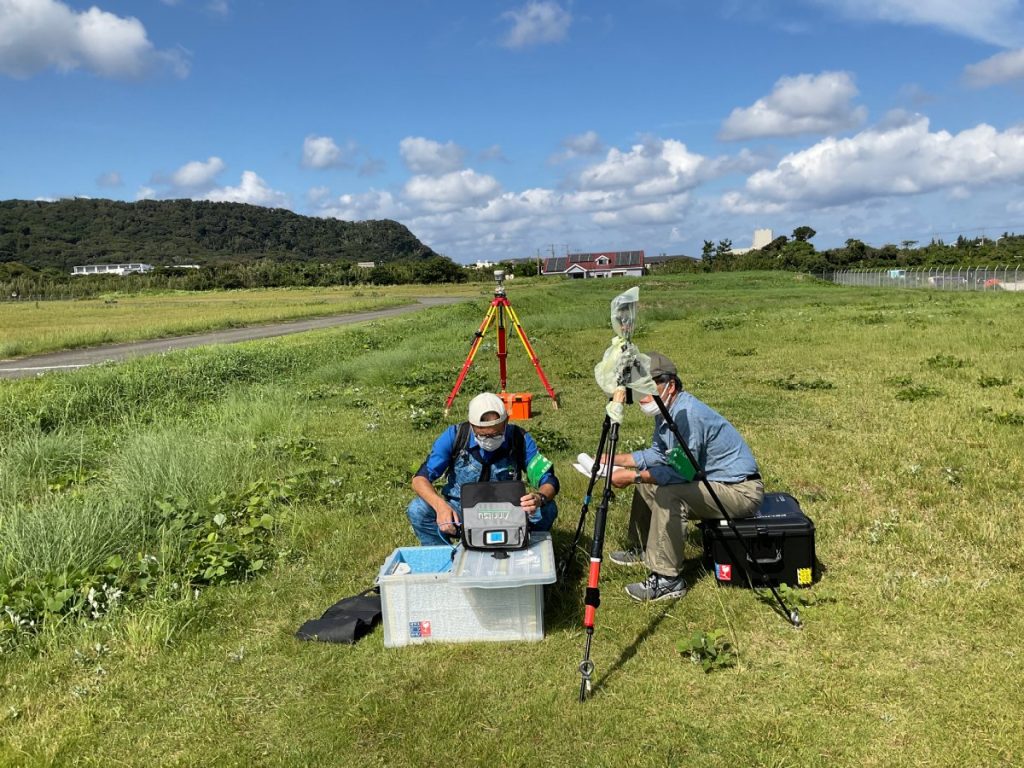
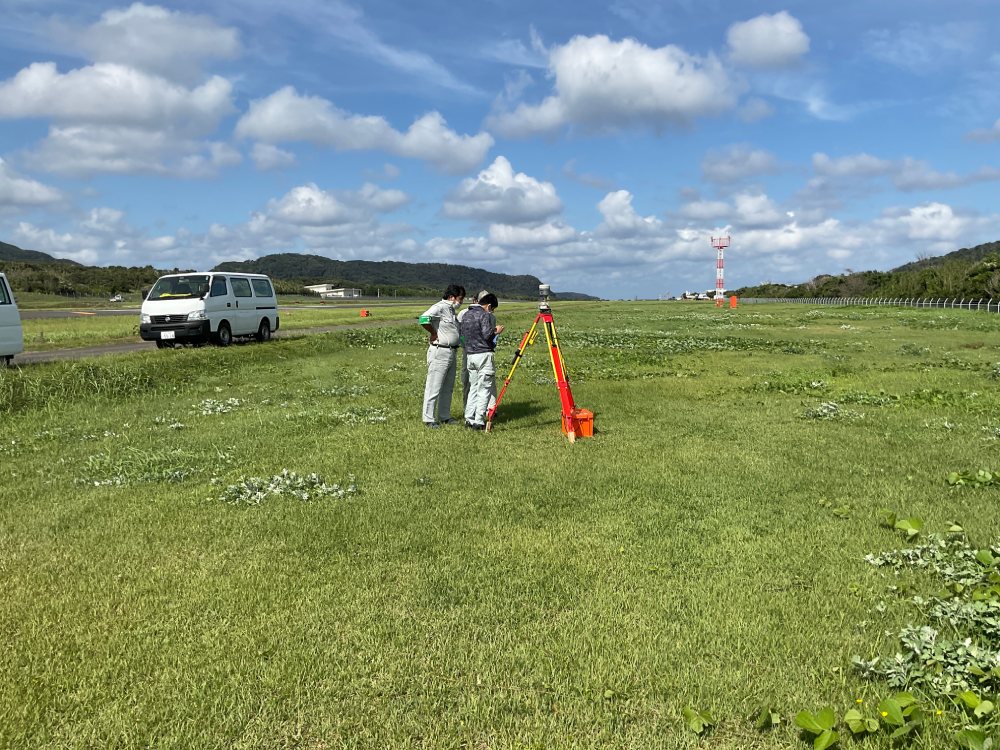
The design documents for LPV (Localizer Performance with Vertical Guidance) for each airport without ILS was prepared in order to introduce the LPV procedure (approach procedure with vertical guidance) utilizing MSAS.